
SAFE AND SOUND
The Metropolitan Opera's New Interest In Contemporary Music

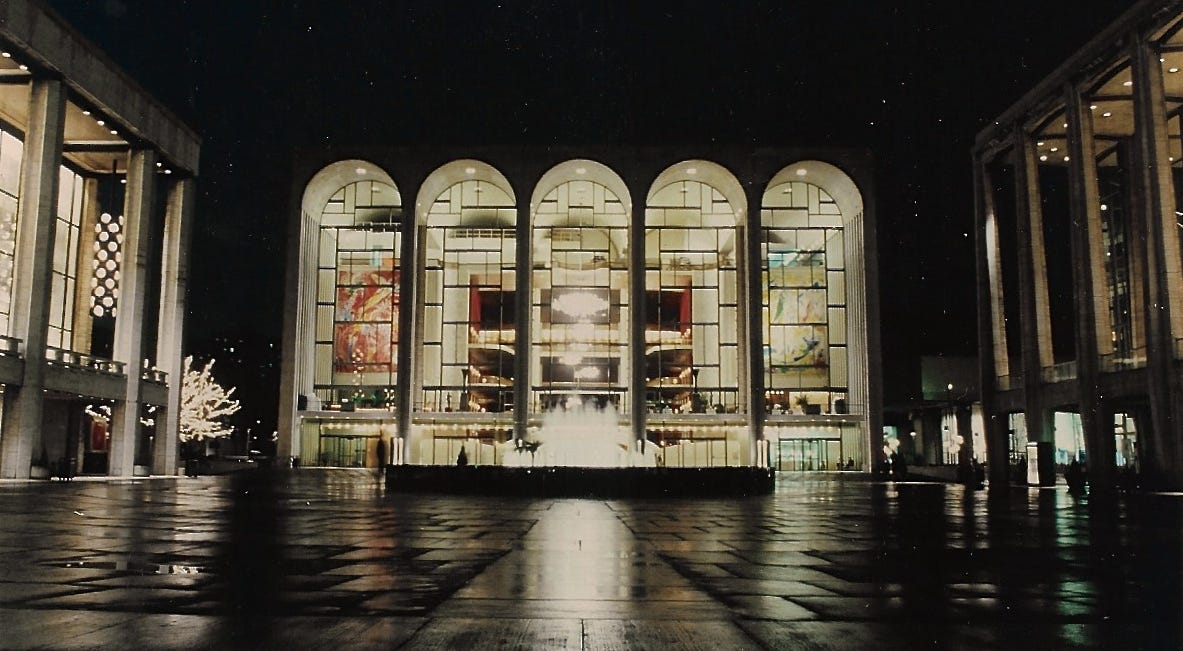
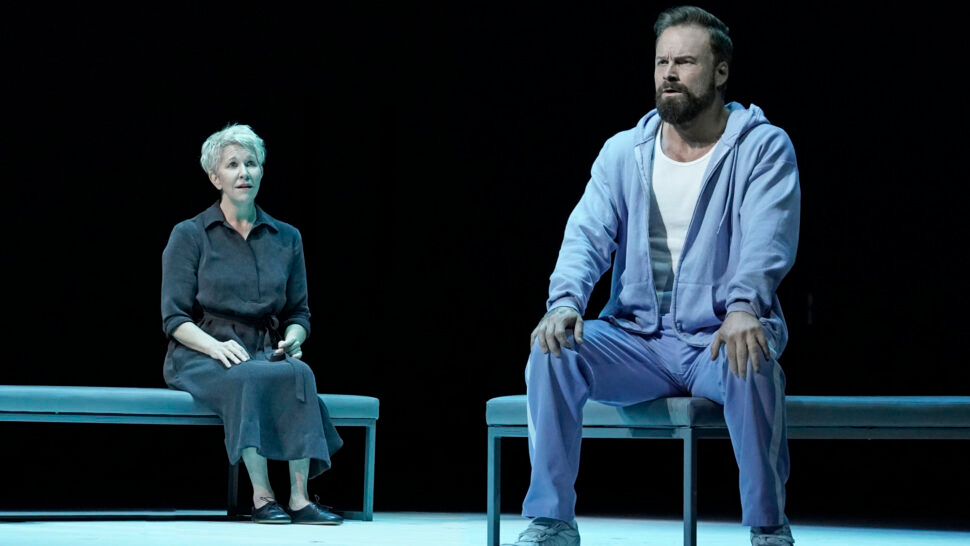
FOR THE FIRST TIME IN DECADES, PERHAPS IN A HALF CENTURY OR more, a hefty bulk of the Metropolitan Opera’s new season will be devoted to the work of living composers. The living, or the somewhat recently departed, will make up six of the eighteen operas presented in the 2023-24 season. The rollout of near daily operatic offerings will begin this month with composer Jake Heggie and librettist Terrence McNally’s 2000 opera Dead Man Walking. The work, which has made its rounds confidently throughout the U.S. for the past two decades, will at last receive its Metropolitan Opera premiere. This will also be the debut for the composer Jake Heggie who himself has confidently made the rounds from regional opera house to regional opera house without ever making it to the big one at Lincoln Center. Daniel Catán’s 1996 magical realism opera Florencia en el Amazonas will also make it to the Met for the first time this November, as will Anthony Davis’s 1986 work X: The Life and Times of Malcolm X. John Adams, one of the few contemporary composers who has made something of a home at the Met, will have his millennium Christmas oratorio El Niño presented in the blossoming heat of late spring. Perhaps the most stunning move this season is in the two revivals of brand spankin’ new works from recent seasons—Terrence Blanchard’s Fire Shut Up In My Bones and Kevin Puts’ The Hours, which will be returning to the house a little over a year after its premiere.
The sheer number of new operas being presented at the towering Metropolitan Opera is astounding. And yet, I keep picturing myself as Charlie Brown in his Christmas special: head slumped into his hand, leaning on a bridge. He looks outward. “I should be happy. But I’m not.” I’m a composer. I enjoy opera. I enjoy contemporary operas. With six contemporary operas in one season and with new commissions coming down the pipeline annually for the foreseeable future, this should make me happy. But nonetheless, there is something about these operas in particular that in the end feels disappointing.
* * *
When I first began obsessively following each new season announcement from the Metropolitan Opera well over a decade ago at this point, there was almost no contemporary opera to speak of. That first year the “new” operas consisted of two new productions: William Kendridge’s hyperactive production of Shostakovich’s The Nose (1928) and Patrice Chéreau’s profoundly bleak production of Janáček’s From The House of the Dead (1930). Both are good modern operas—The Nose is good, the Janáček is a modern masterpiece—but none were, by definition, contemporary works. This dearth of truly contemporary work was due largely to James Levine’s forty-year tenure as music director. It was rare to see an opera at the Met that had recently reached adolescence, rarer still to see a newborn. Most of the time the operas that were slated for the Met’s dreaded “20th century slots”—one in mid-November, the other during the final weeks of the season—were several decades into their Social Security.
It’s not to say that Levine did not champion some 20th century masterworks. It was Levine that brought the newly completed edition of Berg’s Lulu to the Met in 1977 and Kurt Weill’s The Rise and Fall of the City of Mahagonny three years later. But when it came to contemporary music, his tastes were narrow, advocating for American composers who seemed to have a direct and aurally detectable link to the early 20th century. Whether it was the serialism of Charles Wourinen, or the jazz-infused, neoromantic harmonies of John Harbison, or the stunning complexity of Elliott Carter, most, if not all, of Levine’s closest collaborators seemed uninterested in grand opera. Uninterested or at least unsupported by what were, and in some cases still are, the notoriously conservative patrons of the Metropolitan Opera. Only Harbison would eventually write an opera for the company, a drab, overwrought adaptation of The Great Gatsby in 1999.
When the rare opera commission was eventually handed down from the powers that be, the results were often poor. Offers were extended to several composers and contracts were signed and music was written, but infamously, few operas commissioned by the Met ever made it to the stage. Two planned world premieres had a highly publicized on-again-off-again relationship with the institution: Jacob Druckman’s Medea and an opera by Osvaldo Golijov centered around the story of the Greek princess Iphigenia.
Others which were eventually premiered proved to be duds. Tan Dun, the Oscar-winning film composer of Crouching Tiger, Hidden Dragon, was commissioned to write a large-scale opera for Placido Domingo. On paper, this seemed to have everything going for it, financially if not critically: popular film composer writes a new opera for one of the biggest stars of the past half-century. It was billed as a kind of eat-your-vegetables approach to contemporary opera—come for Domingo, trudge through the new music. What resulted was The First Emperor, a large expensive amusement park of an opera. The towering staircase in which an abstracted Great Wall was constructed over the course of the evening and the fantastical colorful robes cloaked a hollow hodgepodge of an opera. The score was part Puccini lyricism, part Peking opera theatre, neither of which merged to create a singular musical vocabulary.
Arguably, the crowning achievement of Levine’s tenure at the Met as far as new opera was concerned was John Corigliano’s grand opera buffa The Ghost of Versailles. A fun classical pastiche, which at times could come off a little cloying, the opera has been warmly embraced by other opera companies since its 1991 premiere.
There seemed to be a noticeable shift in the presentation of contemporary opera at the Met around 2008. That year, the Met presented the visually arresting English National Opera production of Philip Glass’s Satyagraha. The production, which included a team of puppeteers and dancers, was a departure from the traditional park-and-bark style of performance at the Met. More than an opera, Satyagraha was marketed and embraced as a cultural happening. People interested in dance, visual art, performance art, and music could all get something out of the production.
Also around this time, Levine’s grip on the company began to loosen. As his persistent health problems became more of an issue, his dominance over conducting responsibilities began to wane as did his oversight on repertoire selection. This transition period would lead to his eventual dismissal from the Met—as long-rumored allegations of sexual harassment came to the surface during the Me Too movement—and to the rise of the young current music director Yannick Nézet-Séguin.
IT HAS BEEN UNDER NÉZET-SÉGUIN’S LEADERSHIP THAT THE MET has enthusiastically brought recent, mostly American operas to the house and commissioned new works for Lincoln Center. For the first time in the company’s history, the Met will present a newly co-commissioned opera each season for the next decade or so.
This current season’s especially robust cavalcade of late 20th and early 21st century American operas was heralded in triumphantly by Peter Gelb, the Met’s General Manager since 2006, as a necessary shift for the company. “With this lineup for the 2023–24 season, we are addressing the needs of core opera lovers, who think of the Met as the home of the greatest operatic voices, while also embracing the younger and more diverse audiences that increasingly are responding to new musical and theatrical experiences.” There was, of course, a caveat in his speech concerning these new musical and theatrical experiences. “The future of opera relies on a re-balance,” Gelb explained, “between the classics and relatable new work.” Gelb was making an explicit point: there will indeed be new, contemporary work, but it will be, perhaps must be, relatable. However vague the term “relatable” might be in terms of art, the Met’s recent contemporary offerings, along with preparations for future seasons, paint a fairly clear picture of what Gelb and Nèzet-Sèguin mean.
What I assume they mean by “relatable” is comfortable. Though there is a recent push for audiences to “see themselves” in the stories presented on stage, this idea of relatability goes beyond empathizing with contemporary characters. What the Met wants is for these new works to be comfortable, as though the beloved operas of the past were ever easy listens. Comfortable as well as relating to entertainment their audiences are already familiar with: film, TV, Broadway musicals. Musically speaking, the new operas the Met has presented—Blanchard’s Fire Shut Up In My Bones and Champion, Kevin Puts’ The Hours, Jake Heggie’s Dead Man Walking—are closely related to canonical Broadway musicals and recent orchestral film scores in their sound and structure. There are clear breaks between arias (songs) and recitative (dialogue), a shift back to the era of the Bel Canto operas of Donizetti and Rossini but really a nod to the formal layout of an American musical. The scenes in these operas often shift very quickly, limited to a few minutes before moving on to the next thing, like in a binge-worthy television series. Gelb and Nèzet-Sèguin are aware that it is a stretch for audiences to gamble with a new opera, let alone opera in general. The goal in bringing these new works to the Met is to make certain that no one is alienated from the music, the story, or the production. The more these operas can relate to forms the audience is already comfortable with, the better.
But in order to present operas that are comfortable and relatable, a kind of musical and emotional ambiguity needs to take a backseat. Music is unique in its ability to convey nuance through its abstraction. Since musical tones and timbres do not, in and of themselves, mean or represent anything, the use of it in a theatrical work allows the music to occupy a different stream than the drama itself. If the drama on stage is conveying one specific idea or emotional state, the music has the ability to travel myriad streams that can contradict, mock, warn, confront, and stand in stark indifference to the plot. The composers who occupy the core of the operatic repertoire—Mozart and Wagner in particular—understood this. Mozart, in Cosi Fan Tutte and Don Giovanni, deploys objectively beautiful, simple tunes when the plot on stage is at its most violent, deplorable, and evil. Similarly, Wagner is always cluing the audience in that the orchestra knows far more about what is to come than the characters on stage. This ability to perceive several artistic layers at once, with all of their contradictions and juxtapositions, is one of the great devices for an opera composer. There is drama, dance, visual art, and vocal music on stage, instrumental forces in the pit. The central tenet that all of these new operas seem to have in common is a rejection of this kind of juxtaposition. The purpose of the music in these operas, it would seem, is to simply amplify and highlight the action that is on stage. If moments of exuberant joy are presented, the music joins in on the happiness. If sad moments arise, the music follows suit. There are moments in which the music serves a different function, but those scenes are few and far between.
One notable exception to this rule were moments in Fire Shut Up in My Bones which opened the Met’s 2021-22 season and will return this year. Nearing the end of the first act, when the older Charles flashbacks to himself as a child being molested by a family member, the music becomes still and stagnant with a high minor second drone hovering above a wordless off-stage chorus. The soprano Angel Blue emerges as the character of Destiny and narrates Charles’ past and future as the scene unfolds, in a highly melismatic aria that combines aspects of gospel and opera into something that is uniquely Blanchard. The music is at once both grand, intimate and haunting. The juxtaposition of the disturbing sequence of events on stage and the hymn-like chorale emanating from offstage is overwhelmingly effective. But when the action snaps out of this frozen, out-of-body experience, the music turns to a heavy, brooding caricature that reminds the audience, as if they need reminding, that this scene of child molestation is “bad.” Allowing this entire scene to exist in the timelessness of the previous musical environment would have proved more effective in the end than the kind of cinematic underscoring that suddenly turns on a dime every time the action shifts slightly, the music being dragged by the drama like a dog on a leash.
This relation to film music extends to the sound world of these new pieces; there is a near constant lush lyrical sweep that occupies the musical vocabulary of most of the Met’s new operas. In The Hours and Dead Man Walking, and also in Blanchard’s operas, the stream of thick, beautiful lush strings underscores, not just the expansive, confessional arias (of which there are many) but also the ordinary conversational scenes that seem to exist only to get to the next big number. The vocal lines, which are almost always doubled in octaves by the vast string section, are similarly soaring and melodic. These moments of deep confessional outbursts or unapologetic beauty are not reserved for key scenes in the drama. Rather, they comprise the entire musical vocabulary for the evening. If everything in a musical drama is sweeping and lyrical, then ultimately nothing is.
EVEN THOUGH THE MET HAS PLAYED IT RELATIVELY SAFE musically with its recent slate of new American operas, they are still putting economic guardrails in place to insure that these new accessible operas really work. The company seemed to have learned a lesson from The Great Gatsby and The First Emperor, and for that matter, Nico Muhly’s Two Boys: do not put a new opera on the stage of the Met unless it has been audience-tested elsewhere. The organization realized that the economic formula of Broadway musicals could also work for them. Instead of putting on stage a true world premiere, the Met would do a kind of out-of-town tryout on the opera before they unveiled the work. Thus most, if not all, of the Met’s commissioned operas are co-commissions with other companies. Matthew Aucoin’s Eurydice, for example, was premiered at LA Opera in 2019, revised and edited, and then presented at the Met in 2021. Jeannine Tesori’s Grounded will be premiered this year at Washington National Opera, then, presumably, revised and edited, and then presented at the Met in 2024. The Hours was billed as a rare world premiere at the Met, but that too was tested (and edited and revised) with the Philadelphia Orchestra in a concert version a year before its slated premiere at the Met. The same fate will await Mason Bates’ The Amazing Adventures of Kavalier and Clay when it receives its world premiere at LA Opera in 2024 before coming to the Met in 2025. The contemporary operas that are not commissions have more than proved themselves elsewhere before coming to New York. Dead Man Walking has played nearly every major American opera house for the past 23 years before making it to the Met. Florencia en el Amazonas similarly has traveled quite successfully across the U.S. for almost three decades.
There is nothing inherently wrong with this method of commissioning. It not only favors the pocketbook of the Met (which reportedly spends roughly a million dollars a day just to operate), but it also allows a composer and librettist to tweak all kinds of issues that arise from a premiere performance. But what it does speak to is a failure to take meaningful risks with new work. The company wants the artistic cachet of being a stalwart institution that nonetheless takes risks on the bold, the new, and the innovative. But in practice, the house is avoiding any and all risks by presenting new operas that are overwhelmingly agreeable, non-confrontational, and above all “relatable.” They seem to want to know exactly what they are getting from a new opera and are unwilling to risk alienating patrons and audiences.
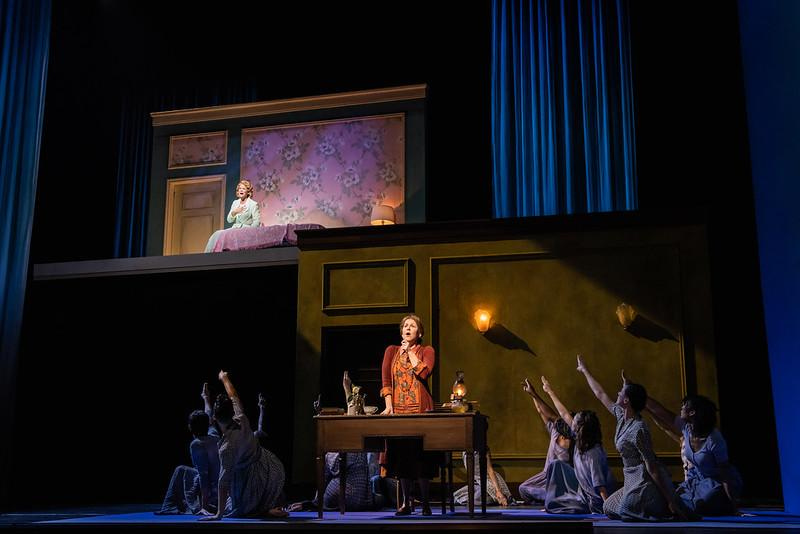
This method has overwhelmingly paid off for the company. It has been well documented that since the pandemic, the audiences for the Met’s standard fare of canonical works have declined while the attendance for contemporary opera has increased. This past season, the house was nearly half empty (optimistically half full) during the run of David McVicar’s recent production of Verdi’s Don Carlo. But we must be honest with ourselves that it is not the new music alone that is bringing in the crowds. Take The Hours which, in an unprecedented move, is coming back this season one year after its initial run. As much as Kevin Puts is a composer I’m sure the audiences of the Met enjoyed, they probably did not initially come to The Hours because of Puts. They came for three mega opera stars: Joyce DiDinato, Renee Fleming, and Kelli O’Hara. They came for an adaptation of a Pulitzer Prize–winning novel and Oscar-winning film. This an extreme example, but most of these recent offerings have something, oftentimes an adaptation of a popular book or film, that will bring an audience in.
This is not to say that the Met has not presented any complex or at times difficult contemporary opera in recent years. Most of these operas come from Europe and have scaled the near impossible artistic wall of being deemed classics only a few years after their premieres. Brett Dean’s hair-raisingly eerie adaptation of Hamlet made it to New York last year to great critical acclaim if not sold-out crowds. Similar fates have met two operas by Thomas Adès, The Exterminating Angel and The Tempest, and the late Kajia Saariaho’s L’amour de Loin. Her Innocence, a chilling and deeply moving opera about the aftermath of a school shooting, will come to the Met in a few years. These substantive and difficult but overall fulfilling works are few and far between in the Met’s contemporary offerings. It is still truly shocking to me that Gelb has not produced an older work or commissioned a new one from arguably the greatest opera composer of our time, the British composer George Benjamin, whose 2012 masterpiece Written on Skin was hailed by some critics as the greatest modern opera since Berg’s Wozzeck. Similarly, the Met has yet to bring European masterworks of the late 20th century to the house, for example, Oliver Messiaen’s Saint François D’Assise which was supposed to come to the Met years ago, but ultimately never made it. What these operas seem to understand that the new, overwhelmingly American operas don’t is that opera can be difficult and complex without being cold, dismissive, and isolating. A work of art should leave an audience asking questions as well as entertained and fulfilled.
I do not envy an American opera composer. There is a fundamental problem with the very idea of “American Opera” because there is already a solid tradition of music theatre in the U.S., the aptly named American Musical Theatre. Most, if not all, American composers who write opera feel the need to contend with that history when writing in an artform with solid roots in Europe.
This leads to a kind of profound identity crisis that each of these operas being presented at the Met is wrestling with: how much musical theatre and how much opera at any given moment? One can see, in the lesser of these operas, one theatrical genre overtaking the drama, when suddenly the creator realizes what is happening and quickly shifts gears, oftentimes vastly overcompensating. It is rare to see a unique merge of these two forms into something that is new and interesting. It is often times, for these librettists and composers, a desperate adjustment of dials, attempting to keep the two genres in check.
Perhaps that is the goal. To have two musical theatre genres, both unique in their own ways, occupying fifty percent of a musical vocabulary, libretto, and production. It gives an audience a little bit of everything they would like in a musical evening. This hybrid which to some seems off kilter and clumsy, to others is just right. To the Met, that formula seems to be paying off.